



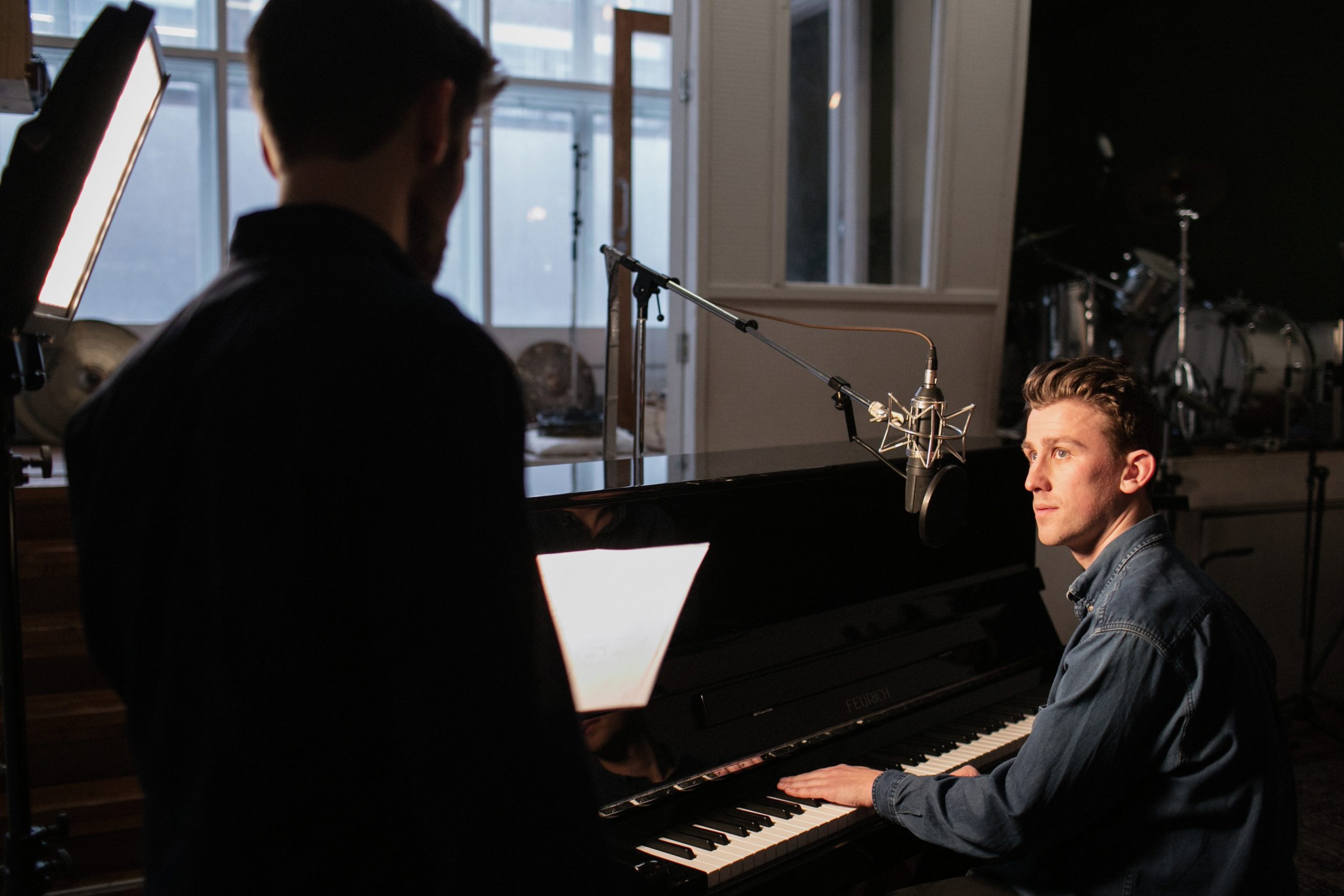
Here’s my vocal recording process, step by step, for capturing that killer vocal. (If you missed Part 1 on how to record professional vocals, start there. The key elements begin before you even press record.)
When it comes to the vocal recording process, the most common mistake I see is an artist putting too much pressure on the first takes. The goal of the first take isn’t perfection but rather gathering information. I usually ask a vocalist to sing the song from start to finish three times. Generally each take will get better. Then we’ll listen back together.
The important thing is hearing the vocal objectively in the context of the song.
We’ll ask questions like:
- Does the emotional intention of the song come across?
- Does the vocal build throughout the song?
- Are there moments where the singer sounds connected and convincing?
- Are there areas where the performance could be pushed further?
An experienced vocalist will often identify these things themselves. A less experienced singer may need more guidance.
Either way, the goal is the same: finding opportunities to improve the performance – and as a music producer, my job is to guide that process.
Knowing When To Stop: Don’t Drown In Takes
Once we’ve identified areas to improve, we’ll record some more takes. Usually, the performance gets stronger with each one as the singer becomes more comfortable with the song. They start to understand what works and make better choices.
But there comes a point where the performance quality starts to tail off and knowing when to stop is an important part of the process. Otherwise you end up with too many takes and finding the best one is like finding a needle in a haystack.
The goal isn’t to collect endless vocal recordings but to capture the right moments.
The Producer’s Role In The Vocal Recording Process
A producer isn’t just there to press record. A big part of the job is listening
Sometimes a singer will deliver a technically great performance, but something is missing. Maybe the emotion isn’t strong enough or energy drops in the second verse. Maybe the singer is holding back when the song needs more intensity.
These small, nuanced decisions can transform a good vocal into a great one and the producer’s job is to help the artist hear what they might not hear themselves.
Once we’ve captured several strong performances, if there are still gaps we’ll drop into sections individually (rather than singing through the song in its entirety). For example, if the second chorus isn’t quite where it needs to be, we’ll do several takes of just that chorus. And so on and so forth until we have everything we need.
TIP I always have the vocalist start singing several bars before the section we want to capture. This helps with continuity.
Creating The Final Vocal Performance
The next stage is creating the final vocal from the assortment of takes. This process is called vocal comping.
Rather than expecting one perfect take, I build the final vocal by combining the strongest moments from multiple performances. One take might have the best emotion in the verse, another might have the strongest chorus. The skill is knowing which moments serve the song best.
When comping vocals, I always prioritise performance over perfection. Sometimes a crack in the voice will add something special. During the recording of Messy, Lola Young had a stinking cold. But it added a fragility to her voice that worked really nicely in the context of the track – the snot-ridden take made the final recording.
TIP When you listen back to vocal takes, the tendency is to ignore those that are a bit pitchy (out of tune). But try and hear beyond the tuning to the performance. When auditioning takes I always prioritise performance over tuning – tuning is something I can fix later.
Processing Vocals: Enhancing The Vocal Performance
Once the performance is right, the technical side becomes much easier.
I’m not going to dive into mixing vocals in this article – it’s a big subject. But whilst compression, EQ, tuning and vocal effects are all important tools, they should enhance the performance rather than replace it.
No plugin can create emotion. No amount of processing can turn an uninspired performance into one that makes someone actually feel something.
TIP Finish The Lead Vocal Before Adding Layers
Another important part of the process is making sure the lead vocal is completely finished before adding doubles or harmonies.
The lead vocal is the centrepiece and additional vocal layers should support it and add depth and excitement. If the lead vocal isn’t working, adding more layers usually just hides the problem rather than solving it.
Final Thoughts
A professional vocal isn’t created by fixing problems after recording, It’s created by capturing the right performance in the first place.
The goal isn’t perfection – The goal is connection.
The best vocal performances are the ones where the listener believes every word, feels the emotion behind the song and connects with the person singing it.
For me, the vocal recording process boils down to helping the artist realise their best possible performance
Jim Hustwit is a London based music producer and award winning songwriter songwriter.